Bar With Private Room Advantages for Exclusive Birthday Dinners
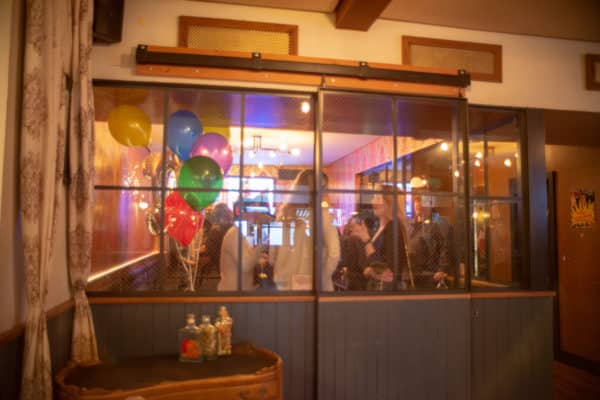
Birthday dinners change as people get older. At 21, a crowded room and a loud round of drinks may be the whole point. By 30, 40, or 60, most hosts want something sharper and more considered. They want good food, easy conversation, attentive service, and enough privacy that the evening feels designed rather than improvised. That is where a Bar With Private Room often proves its value.
A private room inside a bar or bar-led restaurant occupies a useful middle ground. It gives guests the energy and polish of a hospitality venue, but strips away the worst parts of a public dining room: noise from nearby tables, walk-in traffic, awkward seating compromises, and the feeling that the celebration is competing with everybody else’s night out. For exclusive birthday dinners, that shift matters more than many hosts expect.
I have seen private birthday dinners succeed for very different groups, from ten close friends celebrating a 35th birthday over oysters and martinis to a multigenerational 50th where grandparents wanted comfort, cousins wanted cocktails, and the guest of honor wanted zero stress. In both cases, the room itself did some of the work. It contained the occasion, gave it shape, and let the host focus on people instead of logistics.
Privacy changes the emotional tone of the night
The strongest advantage of a private room is not status. It is comfort. People behave differently when they are not hemmed in by strangers on either side. They speak at a normal volume. They tell stories they would not share across an open dining room. They linger over dessert instead of feeling pressured by the turnover rhythm of the main floor.
A birthday dinner is often built around memory. Friends retell old disasters from university, siblings roast each other, parents give sentimental toasts that would Bar With Private Room feel too exposed in the center of a busy restaurant. Even reserved guests tend to open up in a closed room with familiar faces. That emotional ease is difficult to price, but it is often the difference between a pleasant dinner and a memorable one.
Privacy also helps guests who do not enjoy spectacle. Not everyone wants servers singing in front of strangers or a roomful of people turning to look when a cake arrives. In a private setting, celebration can be warm and personal instead of performative. That distinction matters for introverts, older guests, and anyone who prefers depth over display.
Noise control is not a small detail
Restaurants love atmosphere. Hosts often discover too late that atmosphere can make conversation nearly impossible. A birthday dinner should allow everyone at the table to hear the person who matters most. In a main bar area, music volume rises with the crowd, glassware crashes, and neighboring groups spill over acoustically. Even an excellent meal can feel disjointed when half the table misses every other sentence.
A private room tends to soften that problem. Not every room is perfectly soundproof, and it is worth asking direct questions before booking, but even partial separation from the bar floor usually lowers noise enough to hold a real conversation. This matters especially for mixed-age groups. Grandparents, young professionals, and children do not share the same tolerance for volume. A contained room allows the venue to keep its public energy while your event keeps its conversational quality.
There is also a practical side to this. Toasts, speeches, and surprise moments land better in a room where everybody can hear them. If the host has arranged a slideshow, a custom playlist, or a quick game, the private room turns those touches from strained gimmicks into natural parts of the evening.
Service gets more focused when the event has its own space
One of the most underrated benefits of a Bar With Private Room is how it sharpens service. In the main dining room, servers divide attention across many tables with different needs and pacing. In a private room, especially one assigned a dedicated server or small team, the event gets a cleaner rhythm. Drinks arrive together. Plates clear on time. Dietary requests are tracked without repeated reminders.
For birthday dinners, pacing matters almost as much as food quality. The room should not feel rushed, but it should not drag either. A good private dining team knows how to time cocktails, starters, mains, speeches, cake, and final rounds so the evening feels effortless. Guests rarely notice that orchestration directly. They notice the result. The night feels smooth.
This is particularly useful when the host is balancing multiple personalities. In almost every birthday group, there is one guest who wants to order immediately, one who arrives late, one who cannot eat dairy, one who drinks only sparkling water, and one who decides to ask about whiskey flights just as entrées should be fired. In a private room, the staff can manage those variables discreetly. In the public dining room, those same variables can slow the entire table and fray the host’s patience.
A better setting for curated food and drink
Bars with private rooms often outperform standard banquet spaces because they retain personality. Many hotel function rooms feel interchangeable. A private room inside a bar usually carries some of the venue’s identity with it, whether that means a serious cocktail list, a strong wine program, a whiskey collection, or a kitchen that understands small plates as well as full dinners.
That flexibility matters. Exclusive birthday dinners are rarely one-size-fits-all. Some groups want passed canapés and Champagne before sitting down. Others want family-style dishes, then a long drift into digestifs. Some want a fixed menu to control budget and speed. Others want guests to choose between a few options without turning service into chaos.
A well-run private room can support all of those formats. Better still, bar teams often know how to build the beverage side into the experience instead of treating it as an afterthought. A preselected cocktail for the birthday person, a short pairing for each course, or a late-night switch from wine service to classic after-dinner drinks can give the evening texture. Those details are easier to execute in a contained space than at a standard restaurant table.
The trade-off is that some bars lean heavily toward drinks and underinvest in food. Hosts should be honest about priorities. If the group cares more about dinner than cocktails, book a venue where the kitchen stands on its own. If the room is gorgeous but the menu reads generic, the novelty wears off quickly.
The room creates a sense of occasion without demanding extravagance
Not every exclusive birthday dinner needs chandeliers, floral installations, or a six-course tasting menu. Often, what guests remember is the feeling that the evening had been deliberately set apart from an ordinary dinner. A private room accomplishes that almost immediately. There is a door, a threshold, a moment of arrival. Guests know where to gather. Coats, gifts, and cake have a place to go. The event begins to feel hosted in the full sense of the word.
This can actually save money compared with trying to manufacture exclusivity in an open dining room. In a public space, hosts sometimes overspend on decorations, premium bottles, or entertainment just to create distinction. A good private room already provides context. Even modest styling, perhaps candles, a printed menu, and one strong floral arrangement, can look intentional in a dedicated setting.
That said, exclusivity should not be confused with stiffness. The best birthday dinners still breathe. Guests move around, cluster by the bar, settle back into chairs, and let the night unfold. A private room gives structure without turning the evening into a corporate event.
Guest comfort improves in obvious and subtle ways
Comfort sounds basic, but it is one of the main reasons celebrations go well or badly. In a private room, chairs and table shapes are usually planned in advance. Guests are not squeezed into a long public table where one end cannot hear the other. There is space for bags, outerwear, gifts, and the occasional high chair. Guests who arrive early have somewhere to stand without blocking a service aisle.
The subtle advantages are just as important. A private room gives people freedom to circulate before dinner. Friends who have not met can chat near the drinks station. Family members can gather around the birthday person for photos without inconveniencing neighboring diners. If a child needs a quiet minute or an older guest wants to step away from the main table, the room provides that breathing space.
For larger birthday dinners, room layout becomes crucial. A single long table looks dramatic, but it can split conversation into islands. Round tables help interaction, though they may dilute the centrality of the guest of honor. A U-shaped arrangement works well for speeches but requires enough floor space. These are not abstract event-planning details. They shape how the night feels from the first drink to the last toast.
Budget control is often easier than hosts expect
Some people hear “private room” and assume the bill will immediately jump beyond reason. Sometimes it does, especially in peak seasons or at high-demand venues, but private dining can also improve budget control. Minimum spends, room fees, and fixed menus create clarity. Clarity is useful. It prevents the classic birthday problem where an open-ended group dinner starts modestly and ends in a blur of extra bottles, shared plates, and split-the-check confusion.
A private room lets the host decide what kind of generosity they want to extend. They can cover the whole event, host food and welcome drinks while leaving later rounds to guests, or set a firm package and avoid surprises. Many bars offer menu structures that fit different levels of spend without making the event feel cheap.
Here are the cost points worth clarifying before you commit:
- Whether the room has a separate hire fee, a minimum spend, or both.
- What is included in the package, such as glassware, linens, staffing, audio, or cake service.
- Whether service charge and tax are quoted upfront or added later.
- How drink packages compare with consumption-based billing for your group’s habits.
- What happens if guest count drops below the original estimate.
That last point Additional reading matters more than hosts think. A room booked for 20 can feel expensive and oddly empty if only 13 attend. Good venues will help adjust layout and menu planning, but not all contracts are flexible.
It is easier to personalize the experience
Public restaurant bookings limit what a host can control. In a private room, personalization becomes far more practical. Menus can carry the birthday person’s name. A favorite cocktail can be offered on arrival. Music can reflect the group rather than the entire venue. A slideshow, framed photos, or a memory table can be set up without getting in the way of other diners.
These touches do not need to be elaborate. In fact, the most effective ones are often specific and restrained. A 40th birthday dinner built around the guest of honor’s favorite region, with a menu leaning Spanish and a back-bar focus on sherry and gin, feels more sophisticated than a room overfilled with decorations. A 60th with old family photos tucked into place cards feels more intimate than a rented photo booth.
The room also makes surprises easier to execute. A secret guest can arrive without being spotted from across the dining room. A custom cake can be stored and presented cleanly. A musician or short speech segment can happen without negotiating around the normal service flow of the restaurant.
Timing works better when the venue can contain the evening
Birthday dinners often run into one of two timing problems. Either the table is rushed because the restaurant needs the next seating, or the night loses momentum because guests disperse after dinner. A private room helps on both fronts. Venues typically schedule it for a defined block of time, which protects the event from turnover pressure. At the same time, the room offers a natural place to continue after the meal, perhaps with digestifs, a cake cutting, or one last round.
This is especially useful for groups that want a dinner-first, drinks-later flow without changing venues. Moving a party of 14 or 18 to a second location sounds fun in theory and becomes tedious fast, particularly in bad weather, dense city centers, or when several guests are older. Staying in one place keeps the social energy intact.
Some bars also offer a useful hybrid. Guests begin in the private room for dinner, then drift into the main bar once formalities end. That gives the birthday person both intimacy and atmosphere. The key is checking this option in advance. Not every venue can transition a group smoothly from private space to public bar seating on a busy night.
Not every private room is automatically the right one
The phrase Bar With Private Room covers a wide range of realities. Some rooms are elegant and self-contained. Others are little more than curtained corners with thin separation and inconsistent staffing. The best hosts inspect beyond the photos.
A few questions reveal a lot. Is the room truly private, or just semi-private? Can guests play their own music at a reasonable level? How does the venue handle dietary restrictions? Is there a dedicated restroom nearby? Does the room have natural flow for mingling, or only one cramped table? If the birthday dinner involves older relatives, is the access straightforward, with lifts if needed and without steep stairs?
The room’s distance from the main bar is another balancing act. Too close, and you inherit the noise you were trying to avoid. Too far, and the room can feel detached or forgotten. The best private rooms remain connected to the venue’s character while shielding guests from its chaos.
A site visit is worth the effort whenever the budget is meaningful. Photos flatten scale. A room that appears intimate online may feel claustrophobic in person. One that looks plain may have excellent acoustics, warm lighting, and comfortable spacing, which matter much more over a three-hour dinner.
When a private room may not be the best choice
There are cases where private dining is not ideal. Very small groups, say four to six guests, may get better value and energy from a premium table in the main room, particularly at restaurants known for strong service and lower ambient noise. A highly spontaneous birthday with uncertain numbers can also struggle under private room contracts, which usually require deposits and final counts.
Some guests actively want the buzz of a busy dining room. They like being part of the scene, ordering freely from the full menu, and sliding into the bar afterward without any sense of formality. For them, exclusivity can feel too contained. The best celebrations match the personality of the host and the guest of honor, not an abstract idea of luxury.
There is also the issue of pressure. A private room can raise expectations. Once guests know the event has a dedicated space, they expect stronger hosting, clearer timing, and fewer mistakes. Most of the time that is a good thing, but it does mean the organizer should be prepared to confirm details carefully.
How to choose well without overcomplicating it
The smartest private birthday dinners usually come from a few sound decisions made early. Know your real guest count, not the optimistic one. Choose a venue whose food and drink style genuinely suits the birthday person. Ask direct questions about minimum spend, noise, staffing, and timing. Then stop tinkering.
This short checklist helps separate venues that merely rent out space from those that actually understand celebrations:
- The room feels private enough for conversation and toasts.
- The kitchen can serve your group confidently, including dietary variations.
- The beverage program adds something distinctive, not just standard pours.
- The contract is clear on spend, timing, and cancellations.
- The staff responds promptly and sounds experienced with birthday events.
That final point is often the giveaway. Venues that host private dinners well tend to answer practical questions cleanly. They mention pacing, guest flow, and backup plans without being prompted. They have done this before, and it shows.
Why the format keeps growing in appeal
The appeal of a birthday dinner in a private room is easy to understand once you have attended a good one. It combines hospitality and intimacy in a way that few other formats can. Guests receive the comfort of being looked after, but they still feel as if they are inside a personal gathering. The host gets the infrastructure of a professional venue without surrendering the mood of a private celebration.
For milestone birthdays especially, that combination is hard to beat. People want substance now. They want a table where stories can breathe, where grandparents can hear, where the wine lands on time, where the cake arrives without spectacle unless spectacle is exactly what the group wants. A Bar With Private Room gives hosts a practical way to deliver all of that.
The real advantage is not luxury for its own sake. It is control, comfort, and atmosphere working together. When those three align, the birthday dinner stops feeling like a reservation and starts feeling like an occasion. That is usually what the guest of honor remembers long after the candles are gone.
The Winslow
Address: 243 E 14th St, New York, NY 10003
Phone number: +12127777717
FAQ About Bar With Private Room
Which bars in NYC offer private rooms?
Many bars in New York City offer private and semi-private rooms for parties and events, ranging from hidden basement speakeasies to upscale lounge spaces. Top options include The Back Room on the Lower East Side, Dear Irving Gramercy, Pebble Bar in Midtown, Mister Paradise in the East Village, and The Winslow in the East Village.
What is a private room in a pub called?
A small, private seating area or partitioned booth in a traditional pub is most commonly called a snug. Larger private rooms used for events, parties, or dining are typically referred to as private dining rooms, function rooms, or back rooms.
How much does a 2 hour open bar cost?
A 2-hour open bar generally costs between $15 and $45 per person, depending heavily on the quality of alcohol you choose. For a standard group of 100 guests, this translates to an overall cost of $1,500 to $4,500 before taxes, setups, and staff gratuities.